What Happens Between Manufacturing and Patient? The Journey of Temperature-Sensitive Medicines Through the Cold Chain
Every vaccine that saves lives, every insulin bottle, every
special medicine, and every biologic therapy goes on a controlled path before
it gets to a patient. People often talk about making these medicines. There's
another very important process that happens after they're made, and that's
called the cold chain.
The cold chain is like a network that keeps medicines at the
right temperature during transportation, storage, and distribution. This is
really important because if the temperature gets wrong for a little while, it
can affect how well the medicine works and put patients in danger.
As India gets better at taking care of people's health and
making medicines, it has become really important to have a cold chain. This
helps make sure that people get medicines that're safe and work well.
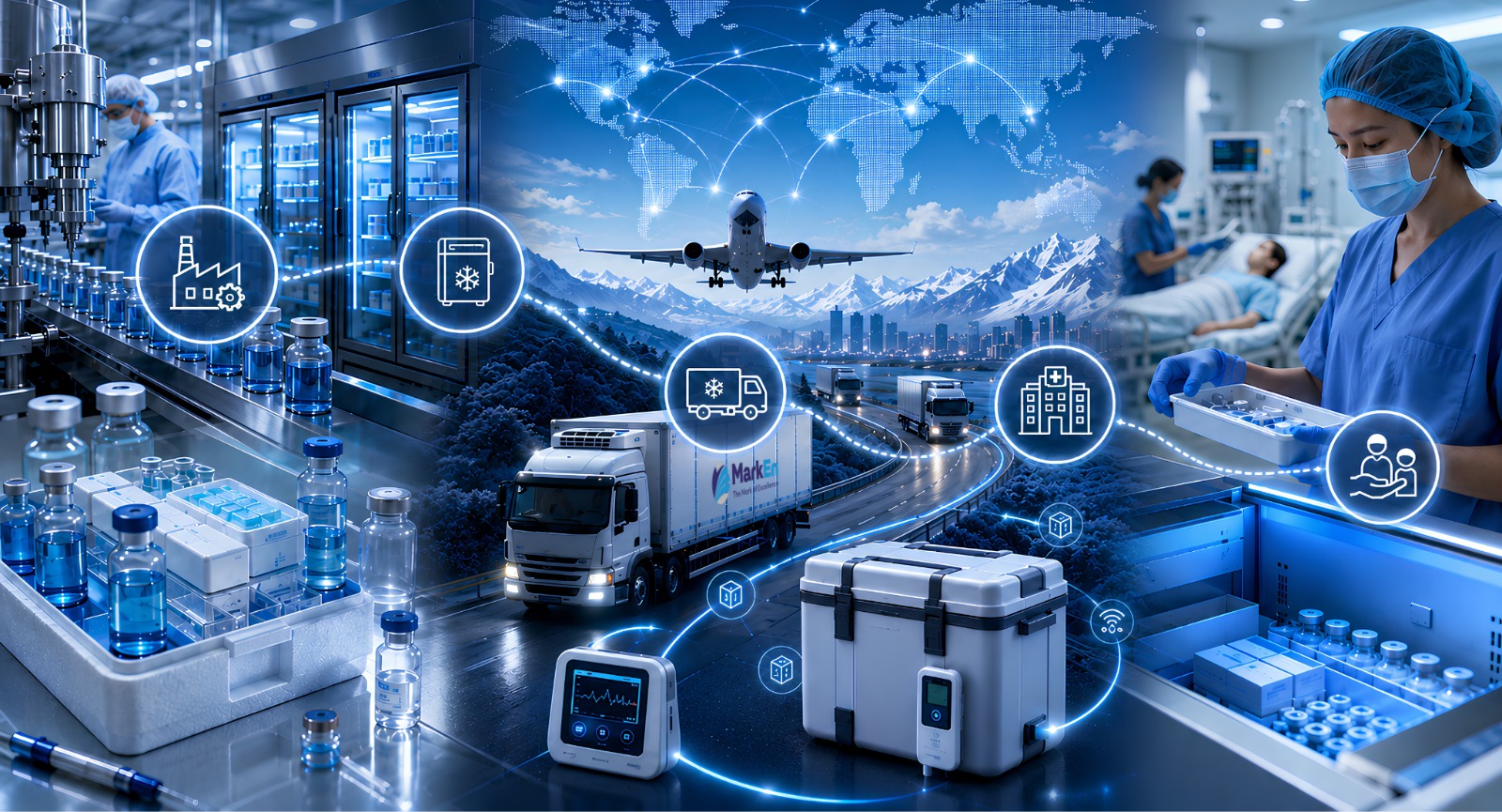
Understanding the Cold Chain
The cold chain is a system that keeps medicines at a
temperature from the factory to the person who uses them. The temperature range
is different for each medicine. Some medicines need to be kept between 2°C and
8°C. Others need to be kept at -20°C or -70°C. This is the case for some
medicines and vaccines.
The cold chain works because of things working together.
These things include storage rooms, special boxes to keep things cold, devices
that check the temperature, special trucks, and people who know how to handle
these medicines.
If something goes wrong in the chain, the medicine may not
be good anymore. This can happen even if the medicine looks fine.
The Journey of Temperature-Sensitive Medicines
1. Manufacturing and Initial Quality Control
The process starts at medicine manufacturing facilities.
Here medicines are tested to make sure they meet quality standards. After
production, they are moved to storage rooms with controlled temperatures.
This helps keep the medicines stable.
Manufacturers keep an eye on the storage conditions. They
also document every step. This is to ensure they follow rules and regulations.
2. Cold Storage Facilities
Before medicines are shipped, they are stored in cold rooms
or refrigerated warehouses. These rooms have systems that continuously monitor
the temperature.
These facilities use alarms, backup power systems, and
real-time monitoring technologies. This ensures that medicines stay at the
correct temperature. This is during power outages.
3. Temperature-Controlled Transportation
Moving medicines from one place to another can be tricky. It
is one of the parts of keeping medicines cold.
Special trucks, shipping containers, and air freight systems
are used. These help keep medicines at the right temperature. They are used to
transport medicines across cities, states, and countries.
Logistics providers now use GPS tracking and special
temperature sensors. This allows them to monitor shipments in time. They can
respond quickly if there are any temperature changes. Medicines need to be kept
at the right temperature.
4. Distribution Centers and Healthcare Providers
When medicines arrive, they go to distribution centers
before they get to hospitals, clinics, pharmacies, or vaccination centers.
Medicines are transferred to these places so they can be given to patients.
Distribution centers and Healthcare Providers are very important for medicines.
Healthcare providers have to keep the medicines in good condition until they
are given to the patients. This means that Distribution Centers and Healthcare
Providers have to be careful with the medicines. They have to make sure the
medicines are stored properly so they do not get damaged.
5. Safe Administration to Patients
The last stop for temperature-sensitive medicines is the
patient. The patient is the one who gets the medicine. Medicines like vaccines
and biologic treatments have to be handled carefully. They have to be stored at
the right temperature so they are safe for the patient. When a patient gets a
vaccine or a biologic treatment, it has already passed checks. These checks
make sure the medicine is good and safe for the patient. A good cold chain
makes sure that patients get their medicines in the condition. This means that
Distribution Centers and Healthcare Providers do an important job. They help
make sure that patients get the medicines they need.
Why Cold Chain Integrity Matters
Maintaining chain integrity is crucial for many reasons:
- It
helps keep vaccines, biologics, insulin, and specialty medicines
effective.
- It
lowers the risk of product damage due to temperature changes.
- It
helps follow international rules for pharmaceuticals.
- It
reduces losses from spoiled pharmaceutical products.
- It
builds patient trust by ensuring reliable treatment results.
As healthcare systems rely more on biologic therapies and
personalized medicines, cold chain reliability will become even more important.
Technology Is Transforming Cold Chain Management
Digital transformation is changing the way pharmaceutical
logistics work. Artificial Intelligence, sensors, and cloud-based platforms are
now used to track the supply chain. These technologies help organizations find
problems before they happen, work efficiently, reduce waste, and follow
regulations. The use of technologies is creating a better healthcare system
that can handle the increasing need for medicines that require special
temperature control.
How MarkEn Is Supporting India's Healthcare Growth
India's healthcare sector is. Companies need people they can
trust who know about new technology and the problems that are specific to the
healthcare industry.
MarkEn is helping to make this change happen by providing
new and innovative HealthTech solutions. These solutions help healthcare
companies work better, use tools more effectively, and make smarter decisions.
MarkEn is important because it helps people in the
healthcare industry use technology to make their work easier and change the way
they do things to include more digital tools. This helps to create a healthcare
system that's more connected, works better, and is ready for the future.
MarkEn is committed to using technology to improve
healthcare. This is helping India to build a more reliable healthcare system
that can take care of millions of people more efficiently. MarkEn. Its
HealthTech solutions are really important to this process.
Conclusion
The journey of temperature-sensitive medicines goes a long
way after they are made. Every single place that stores them, every truck that
moves them, every system that checks on them, and every hospital or clinic that
gives them to people is an important part of keeping them safe and working
properly until they get to the person who needs them.
As new and better medicines are discovered, it is very important to spend money on technologies that keep these medicines cool. This will help make sure the medicines are of high quality that people get better when they take them, and that hospitals and clinics can give the best care possible.
When we use practices for keeping medicines cool and add new digital ideas to the mix, companies like MarkEn are helping to create a better future for healthcare in India. This is a future where technology and good quality care come together to help people and make them healthier.
Recent blog
View All- The Hidden Cost of Downtime: Why Reliable Cold Storage Is a Strategic Investment for Healthcare Facilities
- How Alarm Systems Improve Cold Chain Reliability
- Blood Donor Couch: The Complete Guide for Blood Banks, Hospitals and Donation Centres
- Plasma Thawing Bath: The Complete Guide for Blood Banks, Hospitals and Laboratories
- Sterile Connecting Device: The Complete Guide for Blood Banks & Healthcare Facilities
- Contact Shock Freezer: The Complete Guide for Blood Banks, Hospitals & Plasma Processing Facilities
- Cytocentrifuge: Uses, Principle, Parts & Preparation
- Solar Direct Drive Systems: The Future of Battery-Free Vaccine Refrigeration
- Insulated Vaccine Van: Complete Guide to Vaccine Transportation and Cold Chain Logistics
- Blood Bag Tube Sealer: Essential Equipment for Safe Blood Storage and Handling