Plasma Thawing Bath: The Complete Guide for Blood Banks, Hospitals and Laboratories
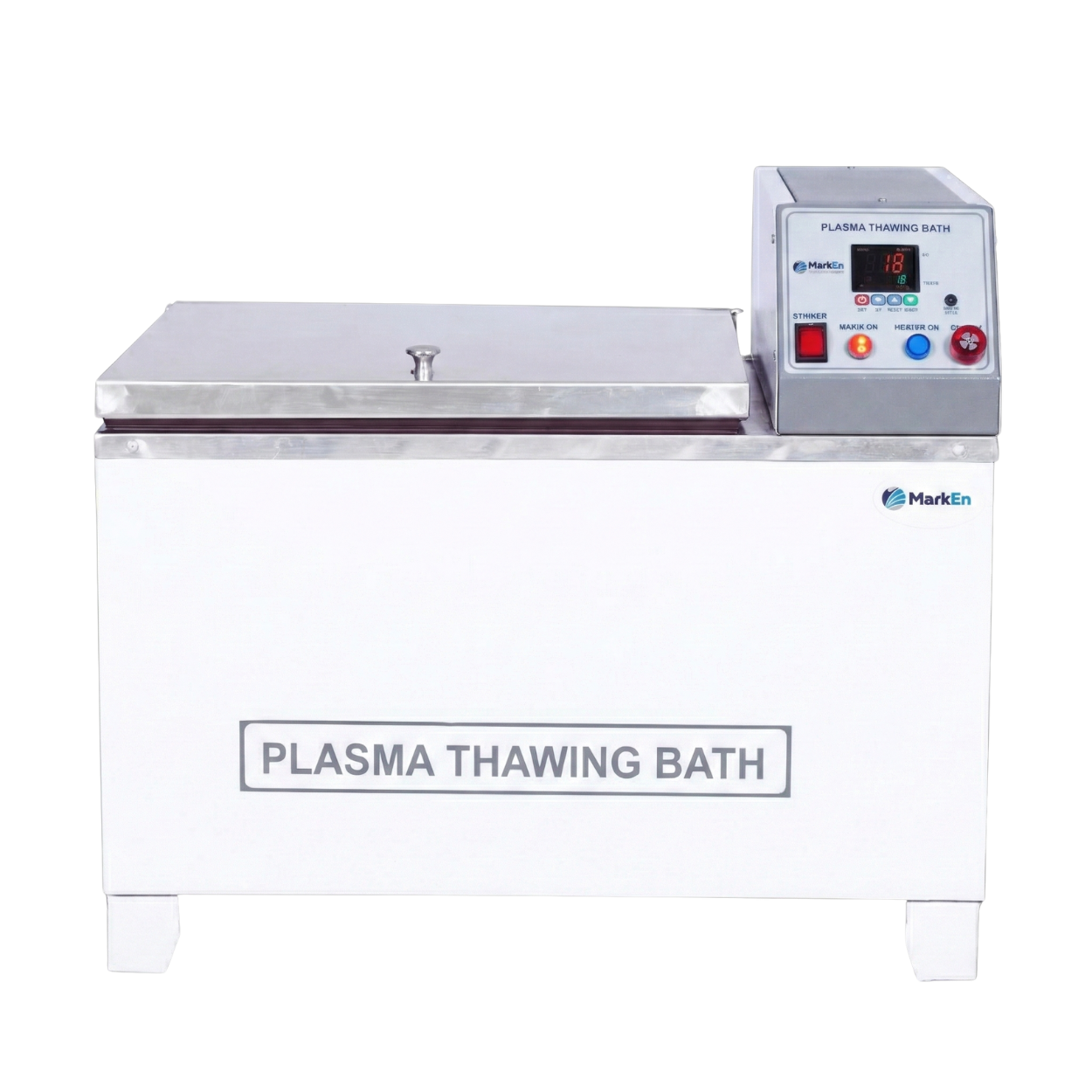
A plasma thawing bath is one of the most essential instruments in any blood bank, transfusion centre, or clinical laboratory. The clinical quality of fresh frozen plasma, cryoprecipitate, and apheresis products depends entirely on how precisely and safely they are thawed before transfusion. Too slow and coagulation factor activity degrades. Too fast or uneven and plasma proteins denature, rendering the product unsuitable for patient use.
The MarkEn Automatic Plasma Thawing Bath is engineered to eliminate both risks: delivering safe, quick, and reliable thawing with precise temperature control up to 56 degrees Celsius, in a compact tabletop unit designed for laboratories and blood banks where accuracy and compliance are non-negotiable.
What Is a Plasma Thawing Bath?
A plasma thawing bath is a specialised medical device that thaws frozen blood plasma products using temperature-controlled water circulation. The device maintains a precise, consistent temperature across the entire thawing chamber, ensuring that every plasma bag reaches the correct core temperature uniformly — without localised overheating or cold spots that compromise product integrity.
Unlike uncontrolled methods such as room temperature thawing or manual water baths, an automatic plasma thawing bath delivers validated, repeatable results that meet regulatory standards for blood product preparation. This makes it the standard of care in licensed blood banks, hospitals, and transfusion centres worldwide.
Plasma Thawing Bath for Blood Bank: Why Precision Matters
Using a plasma thawing bath for blood bank operations is a clinical quality and regulatory imperative. Fresh frozen plasma must be thawed at a controlled temperature, typically between 30 and 37 degrees Celsius, to preserve the maximum activity of coagulation factors including Factor VIII, Factor V, fibrinogen, and von Willebrand factor. These factors are directly responsible for the therapeutic value of FFP and cryoprecipitate in treating bleeding disorders, trauma, and surgical haemorrhage.
A validated plasma thawing bath for blood bank use ensures uniform temperature distribution across all bags in the thawing chamber, prevention of plasma protein denaturation from overheating, full preservation of coagulation factor activity for optimal clinical outcomes, compliance with NABH, WHO GMP, Drugs and Cosmetics Act, and AABB standards applicable to Indian blood banks, and complete documentation support for batch traceability and regulatory audits.
For blood banks processing multiple plasma units simultaneously, a reliable plasma thawing bath for blood bankworkflow is a direct determinant of both product quality and patient safety.
Automatic Plasma Thawing Bath: How the MarkEn Device Works
The MarkEn automatic plasma thawing bath uses efficient water circulation technology to maintain uniform temperature distribution throughout the thawing chamber at all times. Water is continuously circulated around the plasma bags, eliminating temperature gradients that cause uneven thawing. The device maintains precise temperatures up to 56 degrees Celsius, making it suitable not only for standard FFP thawing but also for cryoprecipitate preparation which requires controlled temperatures at the higher end of the thawing range.
The MarkEn automatic plasma thawing bath features a top-opening stainless steel door for easy bag loading and retrieval, double-walled construction for superior thermal insulation and energy efficiency, a compact tabletop footprint that fits easily into any blood bank workstation or laboratory bench, and intuitive temperature and time controls that minimise operator error and processing variability. This combination of precision engineering and practical design makes it the ideal automatic plasma thawing bath for both high-volume blood banks and smaller hospital transfusion laboratories.
Fresh Frozen Plasma Thawing: Clinical Standards and Best Practices
Fresh frozen plasma thawing is one of the most regulated steps in blood component preparation. Globally accepted clinical standards specify that FFP must be thawed in a controlled environment at 30 to 37 degrees Celsius to maintain coagulation factor integrity. Thawing above 37 degrees Celsius risks protein denaturation, while thawing below 30 degrees Celsius prolongs the process unnecessarily and risks incomplete thawing of the bag core.
The MarkEn Plasma Thawing Bath supports best-practice fresh frozen plasma thawing by delivering consistent water bath temperatures within tight tolerances, audible and visual alarms for temperature deviations that could compromise product quality, uniform heat transfer to both sides of every plasma bag simultaneously, and validated performance documentation that supports compliance with regulatory and accreditation bodies including NABH and AABB.
Blood Plasma Thawer for Hospitals and Transfusion Centres
A blood plasma thawer in a hospital or transfusion centre setting must deliver reliable performance under the dual pressures of routine daily throughput and emergency surge demand. The MarkEn blood plasma thawer is purpose-built for both scenarios: its compact design enables installation in hospital transfusion laboratories with limited bench space, while its efficient water circulation system ensures rapid, uniform thawing even when multiple bags are loaded simultaneously.
In emergency trauma and surgical settings where thawed FFP must be available within minutes, a dependable blood plasma thawer is not just an operational convenience - it is a direct contributor to patient survival outcomes.
Plasma Thawer for Cryoprecipitate and Apheresis Products
Beyond FFP, the MarkEn plasma thawer supports the full range of frozen blood component preparation. For cryoprecipitate, precise temperature control in the 30 to 37 degree Celsius range during the initial thawing phase — before transferring to 4 degrees for cryoprecipitate harvest is critical to maximising yields of Factor VIII and fibrinogen. For apheresis plasma products collected from single donors, uniform thawing across varying bag volumes and geometries is essential, and the MarkEn device delivers exactly this through its continuous water circulation mechanism.
As a validated plasma thawer for cryoprecipitate and apheresis workflows, the MarkEn device serves the full scope of modern transfusion medicine component preparation.
Plasma Thawing Equipment Compliance for Indian Blood Banks
All plasma thawing equipment used in licensed Indian blood banks must comply with the Drugs and Cosmetics Act Schedule F Part XII B governing blood bank equipment standards, NABH blood bank accreditation criteria, and WHO GMP guidelines for blood component processing. The MarkEn Plasma Thawing Bath is designed with these requirements in mind, supporting temperature logging, alarm event documentation, and integration with blood bank quality management systems for complete regulatory traceability. For Indian blood banks preparing for NABH accreditation or WHO GMP certification, the MarkEn device simplifies compliance across every plasma thawing workflow.
Frequently Asked Questions
Recent blog
View All- The Hidden Cost of Downtime: Why Reliable Cold Storage Is a Strategic Investment for Healthcare Facilities
- What Happens Between Manufacturing and Patient? The Journey of Temperature-Sensitive Medicines Through the Cold Chain
- How Alarm Systems Improve Cold Chain Reliability
- Blood Donor Couch: The Complete Guide for Blood Banks, Hospitals and Donation Centres
- Sterile Connecting Device: The Complete Guide for Blood Banks & Healthcare Facilities
- Contact Shock Freezer: The Complete Guide for Blood Banks, Hospitals & Plasma Processing Facilities
- Cytocentrifuge: Uses, Principle, Parts & Preparation
- Solar Direct Drive Systems: The Future of Battery-Free Vaccine Refrigeration
- Insulated Vaccine Van: Complete Guide to Vaccine Transportation and Cold Chain Logistics
- Blood Bag Tube Sealer: Essential Equipment for Safe Blood Storage and Handling