Cytocentrifuge: Uses, Principle, Parts & Preparation
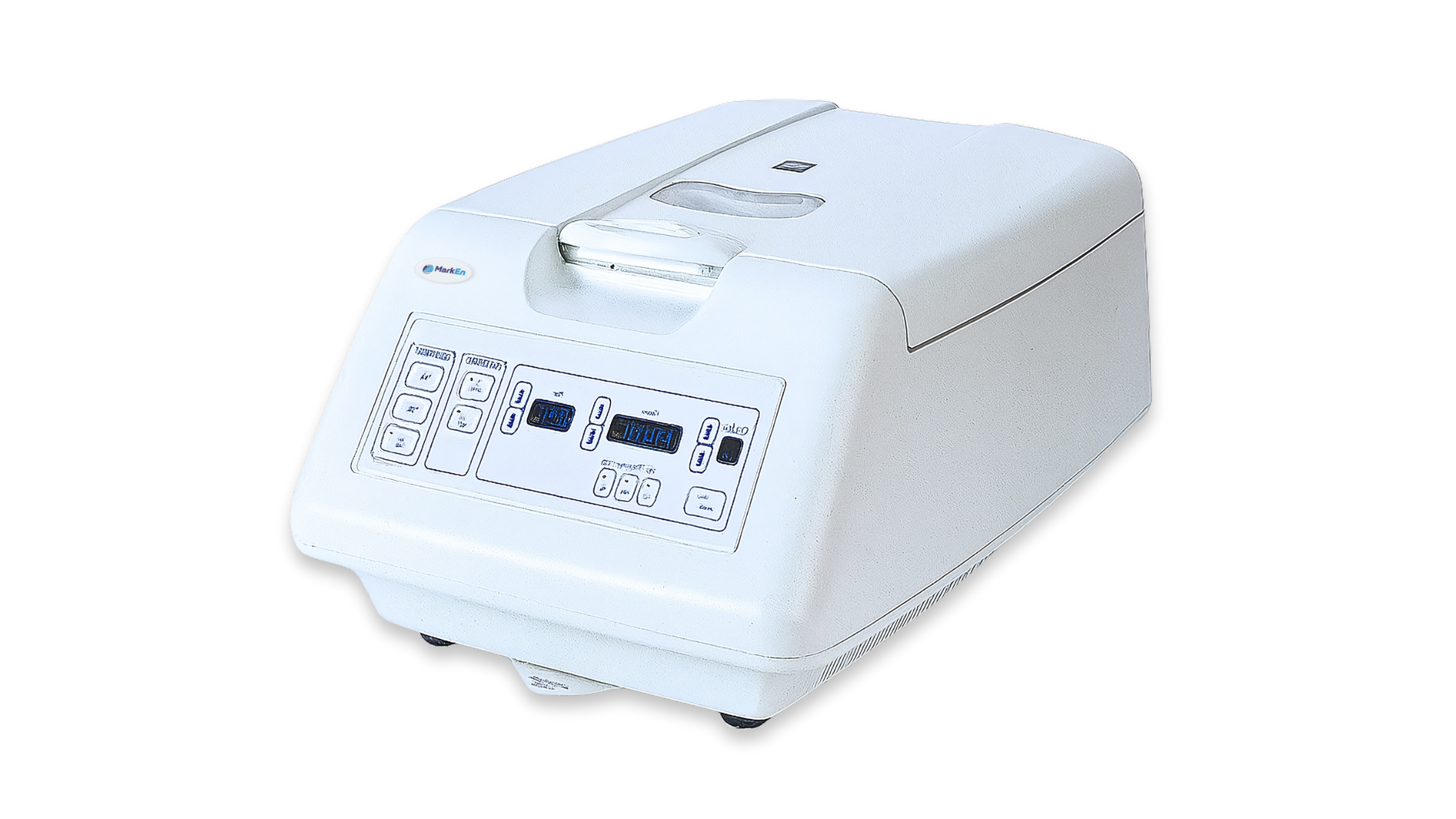
Cytology laboratories require highly precise tools to prepare diagnostic slides from small or diluted samples. One of the most essential instruments used for this purpose is the cytocentrifuge. It enables laboratories to concentrate cells from fluids and deposit them onto a slide for microscopic examination.
MarkEn presents its high performance Cytocentrifuge system designed for accurate cytology slide preparation. We got the best cytocentrifuge models available for clinical labs in India. Built to meet modern laboratory requirements, it simplifies sample handling while ensuring safety, easy cleaning, and consistent performance. Its ergonomic design and user friendly operation make it suitable for hospitals, pathology laboratories, diagnostic centers, and research institutions.
Cytocentrifuge
A cytocentrifuge is a specialized laboratory centrifuge designed to concentrate cells from liquid specimens onto a defined area of a microscope slide. Unlike traditional centrifuges that simply separate components of a sample, a cytocentrifuge directs cells onto a slide in a uniform monolayer.
This technique is widely used in cytology and pathology laboratories to analyze samples such as cerebrospinal fluid, pleural fluid, urine, and other body fluids. Because these fluids often contain very low cell counts, the cytocentrifuge helps concentrate and preserve cells so that they can be clearly examined under a microscope.
Modern cytocentrifuges, such as the system offered by MarkEn, are engineered for reliability, safety, and precise sample handling. Their compact design and automated operation reduce manual errors and improve diagnostic efficiency.
Cytocentrifuge Uses
Cytocentrifuges are essential tools in clinical diagnostics, pathology labs, and biomedical research. Their primary function is to prepare high quality cytology slides from fluid samples that contain suspended cells.
In medical laboratories, cytocentrifuges are commonly used to detect abnormal or malignant cells in body fluids. For example, cerebrospinal fluid samples are processed using a cytocentrifuge to diagnose infections, cancers, and neurological diseases. Similarly, pleural and peritoneal fluids are examined to detect cancer cells or inflammatory conditions.
Cytocentrifuges are also used in hematology laboratories for examining white blood cells and other cellular components. In microbiology and research laboratories, they assist in studying microorganisms and cell structures by concentrating them onto slides.
The ability to prepare consistent and uniform cell deposits makes the cytocentrifuge a valuable tool for improving diagnostic accuracy and laboratory workflow.
Cytocentrifuge Principle
The cytocentrifuge principle is based on centrifugal force, which drives suspended cells from a liquid sample onto a microscope slide. When the sample is spun at a controlled speed, the centrifugal force pushes cells outward and deposits them onto the slide surface.
A specialized sample chamber holds the liquid specimen while an absorbent filter card removes excess fluid. As the centrifuge spins, cells are gently concentrated onto a defined circular area on the slide. This process forms a thin, uniform cell layer suitable for microscopic analysis.
This controlled deposition is crucial because it preserves cell morphology and prevents cell damage. The cytocentrifuge principle allows even low concentration samples to yield diagnostically useful slides.
Modern cytocentrifuge systems use precise speed control and balanced rotor mechanisms to ensure consistent cell distribution and reliable slide preparation.
Cytocentrifuge Thermo
The term cytocentrifuge thermo often refers to cytocentrifuge systems produced or inspired by advanced laboratory centrifuge technologies similar to those used in high precision instruments from global manufacturers.
Thermo style cytocentrifuge systems focus on maintaining consistent operating conditions such as stable rotation speed, balanced sample holders, and controlled processing environments. These features ensure that cell morphology remains intact during slide preparation.
Advanced cytocentrifuges incorporate safety locks, programmable spin cycles, and easy cleaning components. These innovations reduce contamination risk and improve laboratory productivity.
MarkEn’s cytocentrifuge system incorporates similar high performance design principles, ensuring dependable results and efficient cytology slide preparation in routine diagnostic workflows.
Cytocentrifuge Preparation
Proper cytocentrifuge preparation is essential for obtaining high quality cytology slides. The preparation process begins with collecting the biological sample such as cerebrospinal fluid, urine, pleural fluid, or other body fluids.
The sample is placed into a cytocentrifuge chamber that holds both the liquid specimen and a microscope slide. An absorbent filter card is inserted to remove excess fluid during the spinning process.
Before starting the centrifuge, laboratory technicians ensure that the sample chamber is correctly assembled and balanced within the rotor. Once the machine starts spinning, centrifugal force deposits the cells onto a small area of the slide.
After centrifugation, the slide is carefully removed and allowed to dry before staining. The stained slide can then be examined under a microscope to identify cell structures, abnormalities, infections, or cancerous cells.
Cytocentrifuge Preparation
Cytocentrifuge preparation also involves careful handling and calibration of the instrument to ensure consistent performance. Laboratory staff must follow standardized protocols to maintain sample integrity and reproducibility.
Slides must be clean and free of contaminants before being inserted into the cytocentrifuge chamber. The sample volume must also be carefully measured to ensure optimal cell concentration.
Technicians typically select appropriate centrifugation speed and time based on the type of specimen being processed. After processing, slides are fixed and stained using cytological staining methods such as Papanicolaou or Wright Giemsa stains.
Proper cytocentrifuge preparation helps laboratories produce clear and accurate cytology slides that aid physicians and pathologists in making reliable diagnoses.
Cytocentrifuge Parts
A cytocentrifuge consists of several important components that work together to ensure accurate cell concentration and slide preparation.
The rotor is the central rotating component that holds the sample chambers during centrifugation. It ensures balanced spinning and uniform centrifugal force distribution.
Sample chambers or cytofunnels are specialized holders that contain the fluid sample and direct cells toward the microscope slide during centrifugation.
Microscope slides are placed inside the chamber to collect concentrated cells. These slides become the final diagnostic surface examined under the microscope.
Filter cards or absorbent pads remove excess liquid during centrifugation, allowing only the cells to remain on the slide surface.
The control panel allows technicians to set parameters such as speed and spin duration. Safety covers and locking systems protect users while the instrument is in operation.
Modern cytocentrifuges also include ergonomic designs that make cleaning and maintenance simple while ensuring long term durability.
Cytocentrifuge Purpose
The primary cytocentrifuge purpose is to improve the detection and analysis of cells present in body fluids. By concentrating cells into a small area on a slide, cytocentrifuges make microscopic examination more efficient and accurate.
This process is particularly valuable when analyzing fluids with very low cellular content. Without a cytocentrifuge, detecting abnormal or malignant cells in these samples would be extremely difficult.
Cytocentrifuges also preserve cell morphology, allowing pathologists to study cell shape, structure, and abnormalities clearly. This capability plays a critical role in diagnosing infections, inflammatory diseases, and cancers.
MarkEn’s cytocentrifuge system is purpose built to deliver reliable cytology slide preparation while ensuring safety, ease of use, and consistent laboratory performance. Its high efficiency design helps laboratories streamline workflows and produce dependable diagnostic results.
Frequently Asked Questions
Recent blog
View All- The Hidden Cost of Downtime: Why Reliable Cold Storage Is a Strategic Investment for Healthcare Facilities
- What Happens Between Manufacturing and Patient? The Journey of Temperature-Sensitive Medicines Through the Cold Chain
- How Alarm Systems Improve Cold Chain Reliability
- Blood Donor Couch: The Complete Guide for Blood Banks, Hospitals and Donation Centres
- Plasma Thawing Bath: The Complete Guide for Blood Banks, Hospitals and Laboratories
- Sterile Connecting Device: The Complete Guide for Blood Banks & Healthcare Facilities
- Contact Shock Freezer: The Complete Guide for Blood Banks, Hospitals & Plasma Processing Facilities
- Solar Direct Drive Systems: The Future of Battery-Free Vaccine Refrigeration
- Insulated Vaccine Van: Complete Guide to Vaccine Transportation and Cold Chain Logistics
- Blood Bag Tube Sealer: Essential Equipment for Safe Blood Storage and Handling