Sustainability Without the Risk: A Practical Guide to Greener Cold Chain Shipping
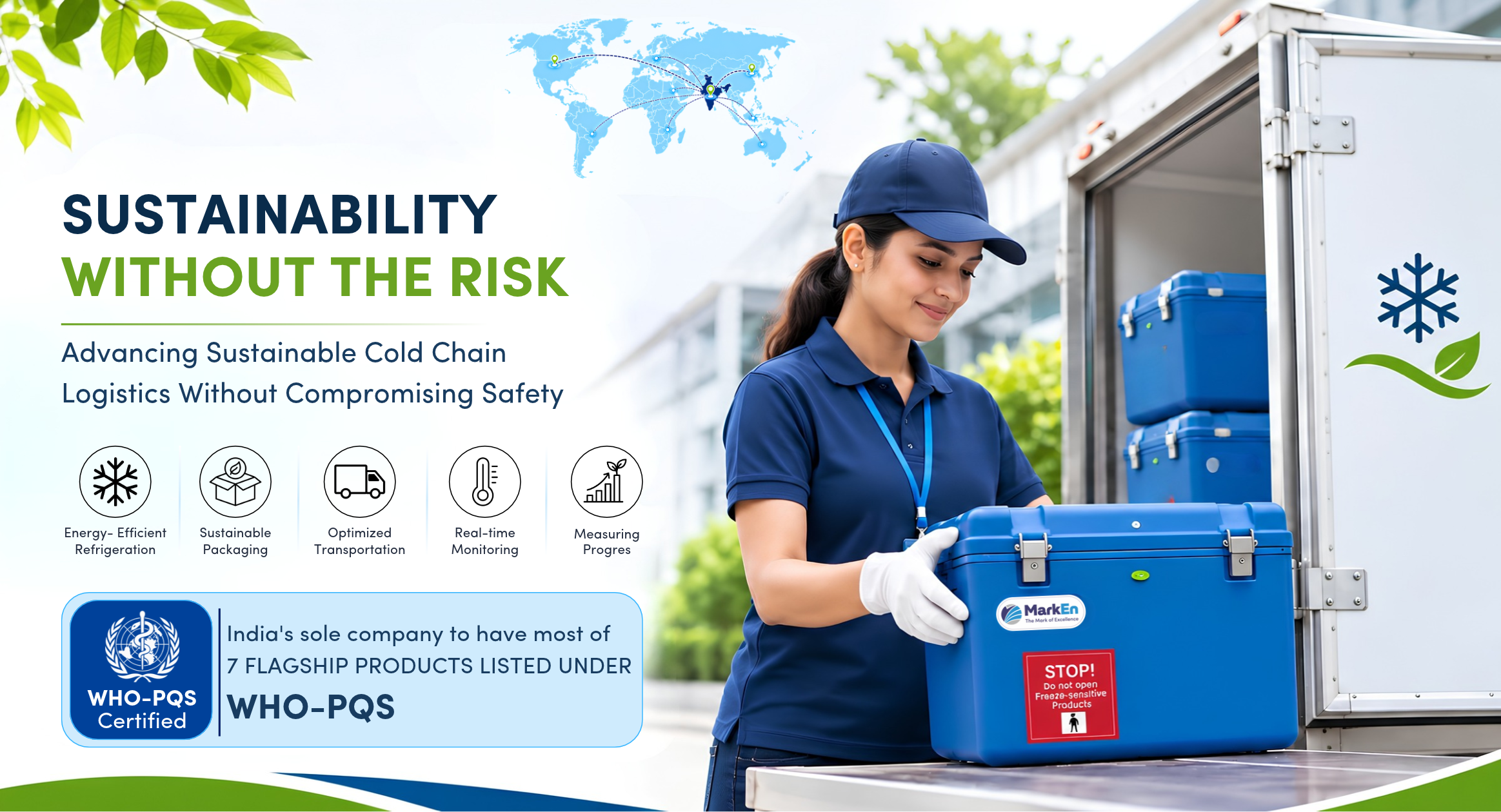
Everyone who has ever had experience with cold chain logistics understands the silent pressure
that accompanies it. A vaccine, biological samples, or a number of clinical samples are
being transported across boundaries, and the only thing that counts is for them
to reach their destination in time.
In light of the above, implementing sustainability might seem to be just another challenge that a cold chain logistics department has to face. It does not need to be so. Green logistics can be implemented in cold chain logistics if the following is done.
Why Sustainable Cold Chain Logistics Matters
Cold chain logistics relies on continuous temperature control, which has a price. Refrigeration requires much energy; there is waste from one-time packaging; there are extra fuel emissions caused by poor routing. The slightest temperature fluctuation is enough to spoil the goods, so both stakes are extremely high here. There is one goal: to lower the environmental impact without compromising product quality, which is very important.
Five Practical Ways to Make Cold Chain Shipping Greener
1. Increasing
refrigeration efficiency: Refrigeration is one of the largest consumers of
energy in cold chain transport. Maintenance, energy-efficient
refrigerators, and refrigerants with low global warming potential will help
save energy without impacting the way the product is safeguarded.
2. Rethinking temperature-controlled packaging: Traditional insulating packaging tends to be waste material. Using reusable thermal packaging and recyclable insulation materials can reduce waste, as long as they provide sufficient thermal protection for the products. Validation is necessary before making changes.
3. Optimizing routing: Each additional kilometre increases fuel cost, CO2 emissions, and expenses. Optimizing the route and consolidating shipments is crucial, in particular for high-volume pharmaceutical transportation.
4. Temperature monitoring in real-time: This is the most overlooked aspect: avoiding loss of the product is a sustainable practice in itself. Real-time monitoring by means of IoT sensors and data loggers helps take action immediately if a temperature excursion occurs to prevent product spoilage and shipment loss.
5. Measuring your progress: Tracking the energy consumption, CO2 emissions, packaging waste, and temperature excursions is crucial. In case of pharmaceutical shipments, any change made should comply with Good Distribution Practice.
MarkEn’s Contribution to Sustainable Cold Chains
Green cold chains begin with quality equipment. Over 25 years, MarkEn has been providing its medical cold chain solutions in India to ensure the best performance of hospitals, blood banks and laboratories, since temperature failure cannot be tolerated there. Specialized range of products: The range of more than 400 different products from MarkEn includes ULT deep freezers (-86 °C), deep freezers (-40 °C), blood bank refrigerators, laboratory refrigerators and passive cold boxes. Quality of MarkEn is confirmed by the following certifications: ISO 9001, ISO 14001, ISO 13485, ISO 45001, WHO GMP.
Energy-efficient equipment: MarkEn cold chain equipment unites energy-saving technologies and real-time monitoring. MarkEn’s solar-powered walk-in coolers and freezers will be useful in regions with limited availability of power supply on the grid.
Post-sales support: A network of 30+ franchises and 500+ service centers all over India helps in sustaining the quality of equipment and minimizing downtime.
Recognized
brands: Among the customers of MarkEn are ICMR and some institutes of AIIMS.
Frequently Asked Questions
Recent blog
View All- The Hidden Cost of Downtime: Why Reliable Cold Storage Is a Strategic Investment for Healthcare Facilities
- What Happens Between Manufacturing and Patient? The Journey of Temperature-Sensitive Medicines Through the Cold Chain
- How Alarm Systems Improve Cold Chain Reliability
- Blood Donor Couch: The Complete Guide for Blood Banks, Hospitals and Donation Centres
- Plasma Thawing Bath: The Complete Guide for Blood Banks, Hospitals and Laboratories
- Sterile Connecting Device: The Complete Guide for Blood Banks & Healthcare Facilities
- Contact Shock Freezer: The Complete Guide for Blood Banks, Hospitals & Plasma Processing Facilities
- Cytocentrifuge: Uses, Principle, Parts & Preparation
- Solar Direct Drive Systems: The Future of Battery-Free Vaccine Refrigeration
- Insulated Vaccine Van: Complete Guide to Vaccine Transportation and Cold Chain Logistics