ULT Deep Freezer Price in India – Complete Buying Guide for Laboratories & Hospitals
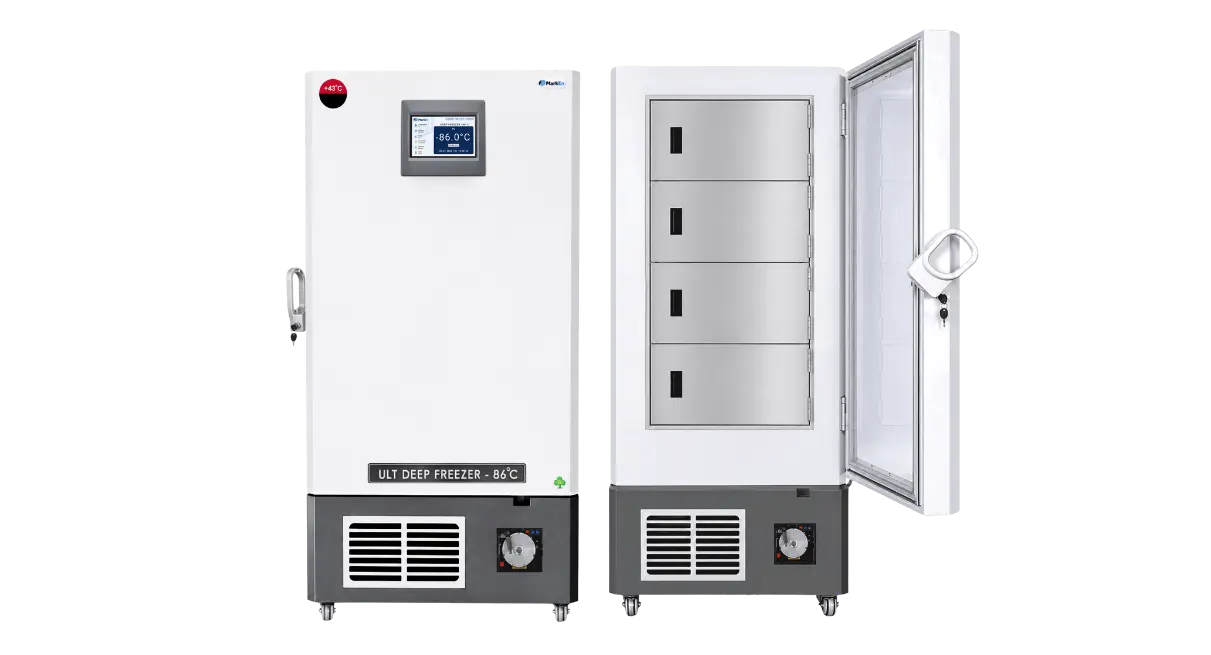
An ULT deep freezer (Ultra Low Temperature deep freezer) is a critical piece of equipment for laboratories, hospitals, pharmaceutical companies, and research institutions that require precise storage between -40°C to -86°C. Unlike a standard deep freezer, an ultra low temperature deep freezer is engineered for sensitive biological materials, vaccines, plasma, and research samples that must remain stable for years.
With India’s growing biotech, vaccine, and clinical research ecosystem, demand for ultra low temp freezer Indiasolutions has increased across pharma laboratories, blood banks, and diagnostic centers.
What Is an Ultra Low Temperature (ULT) Deep Freezer?
A ULT deep freezer is a specialized refrigeration system designed to maintain extremely low temperatures such as -80°C or -86°C, far below the range of commercial freezers.
ULT Freezer Temperature Range
Standard deep freezer: -15°C to -25°C
Laboratory deep freezer: -40°C to -60°C
ULT freezer: -70°C to -86°C
This temperature stability ensures preservation of:
DNA, RNA, and cell cultures
Vaccines and biologics
Plasma and blood components
Clinical trial samples
Microbiological specimens
ULT Freezer vs Deep Freezer: Key Differences
| Feature | Standard Deep Freezer | ULT Deep Freezer |
|---|---|---|
| Temperature Range | Up to -25°C | Up to -86°C |
| Application | Food storage | Biomedical & research |
| Cooling Technology | Single compressor | Cascade refrigeration |
| Temperature Stability | Moderate | Extremely precise |
| Monitoring | Basic thermostat | Microprocessor controlled |
Applications of ULT Deep Freezers in India
Pharma Laboratory Freezer India
Used for drug development, stability testing, and sample archiving.
Vaccine Cold Storage Equipment India
Critical for maintaining vaccine integrity under national immunization programs.
Blood Bank Freezer India
Ensures plasma storage at regulated biomedical temperatures.
Research Lab Deep Freezer
Supports universities, ICMR-aligned labs, and biotechnology startups.
These use cases make medical deep freezer India solutions essential infrastructure for healthcare and life sciences.
How Does an ULT Freezer Work?
An ultra low temperature freezer uses cascade refrigeration technology, combining two compressors to reach extremely low temperatures efficiently.
Dual refrigeration system
Microprocessor temperature controller
High-density polyurethane insulation
CFC-free refrigeration system
Alarm and monitoring interface
This advanced engineering allows long-term cryogenic-like preservation without using liquid nitrogen, making it safer and more practical.
Key Features to Look for Before Buying a ULT Freezer
1. Temperature Uniformity
Uniform cooling prevents sample degradation- critical for clinical research.
2. Energy Efficient Laboratory Freezer Design
Modern ULT units reduce power consumption by 30–40% compared to older cascade systems.
3. Advanced Monitoring Systems
Look for:
Audible and remote alarms
Data logging for audits
IoT-enabled monitoring
4. Backup and Safety Systems
Essential for vaccine storage and biomedical compliance.
5. ULT Freezer Power Consumption
Energy usage depends on:
Ambient Indian climate conditions
Door opening frequency
Insulation thickness
Selecting an optimized system reduces operational cost over its lifecycle.
ULT Freezer Specifications Buyers Should Evaluate
Typical -86 degree freezer specifications include:
Temperature range: -40°C to -86°C
Capacity: 100L to 900L
Cooling method: Cascade refrigeration
Controller: Microprocessor based
Refrigerants: Environmentally compliant
Insulation: Vacuum insulated panels (VIP)
These technical parameters ensure compliance with global laboratory standards.
Maintenance Tips for Ultra Low Temperature Freezers
Proper upkeep ensures longevity and regulatory compliance.
How to Maintain Ultra Low Temperature Freezer?
Clean condenser filters monthly
Verify door gasket sealing
Avoid overloading shelves
Calibrate sensors annually
Maintain ambient room temperature below 30°C
Preventive servicing significantly reduces breakdown risks.
Why Demand for ULT Freezers Is Growing in India
India’s rapid expansion in:
Vaccine manufacturing
Clinical trials ecosystem
Biopharma exports
Academic research funding
has driven demand for biorepository freezer and plasma storage freezer infrastructure nationwide.
Government-backed healthcare expansion and cold-chain modernization are accelerating adoption of ultra low freezer price–driven procurement across Tier 1 and Tier 2 cities.
Frequently Asked Questions
Recent blog
View All- The Hidden Cost of Downtime: Why Reliable Cold Storage Is a Strategic Investment for Healthcare Facilities
- What Happens Between Manufacturing and Patient? The Journey of Temperature-Sensitive Medicines Through the Cold Chain
- How Alarm Systems Improve Cold Chain Reliability
- Blood Donor Couch: The Complete Guide for Blood Banks, Hospitals and Donation Centres
- Plasma Thawing Bath: The Complete Guide for Blood Banks, Hospitals and Laboratories
- Sterile Connecting Device: The Complete Guide for Blood Banks & Healthcare Facilities
- Contact Shock Freezer: The Complete Guide for Blood Banks, Hospitals & Plasma Processing Facilities
- Cytocentrifuge: Uses, Principle, Parts & Preparation
- Solar Direct Drive Systems: The Future of Battery-Free Vaccine Refrigeration
- Insulated Vaccine Van: Complete Guide to Vaccine Transportation and Cold Chain Logistics