The Critical Role of Temperature Stability in Healthcare
There are many ways
that treatment can be impacted by changes in the way products are manufactured,
delivered and handled, including through proper temperature control and
storage. In the case of medical treatments, the proper handling, storage and
distribution of the product ("cold chain management") will have a
dramatic impact on its efficacy.
Medical products
commonly requiring a cold chain are those that require refrigeration such as
vaccines, drugs, biological products, diagnostic devices and blood products;
therefore, health care providers must implement a comprehensive and reliable
cold chain management system to ensure that patients receive the safest and
most effective treatment possible, which will ultimately lead to increased
confidence in their providers. The rapid growth of the healthcare market in
India has resulted in increasing demand for advanced and automated systems for
cold chain management.
Understanding the
Healthcare Cold Chain
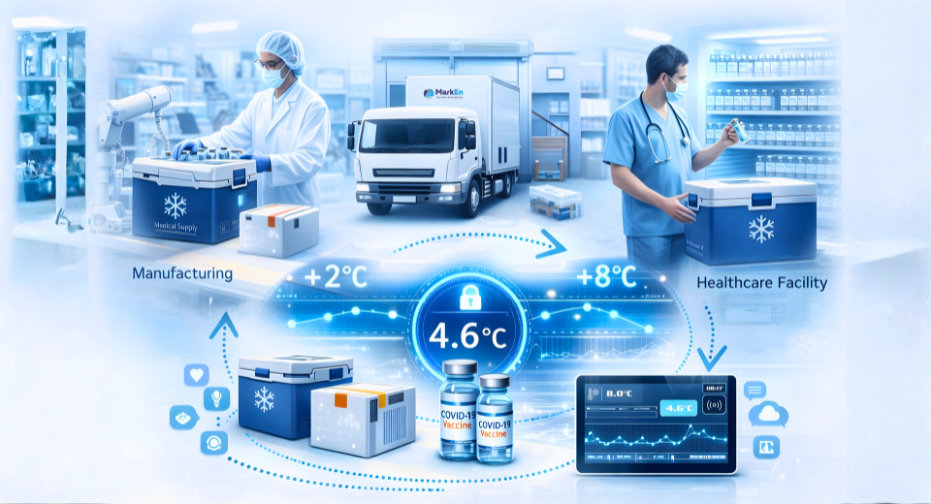
In the healthcare
industry, the cold chain is defined as the complete process of managing
temperature-sensitive products including receiving from manufacture... storing
in the warehouse... transporting and ... arriving at Healthcare Providers
(HCPs) and finally (and indefinitely) to a patient who will receive the
product. Most healthcare products must be kept within their defined temperature
range (+2°C and +8°C), with certain products requiring freezing and ultra-low
temperature storage.
Temperature
excursions (defined as any temperature deviation from the defined range) at any
point in the cold chain can adulterate product quality, potency and/or cause
the product to become unsafe for use. Damage caused to many products during
shipping and receiving may not be immediately evident, which is why effective
monitoring and traceability procedures are considered essential to the
continued security of these products during transit.
Why Temperature
Stability Matters
Temperature stability, is not an isolated logistical concern but also an overwhelming clinical necessity. Any temperature variation, however slight, can have a pronounced effect on a particular class of products in the healthcare realm, as evidenced by the following examples:
• When a vaccine or
biologic is subjected to temperatures above or below the acceptable range of
temperatures recommended by the manufacturer, the vaccine or biologic may
experience a decrease in potency, leading to reduced immunity or treatment
failure.
• When insulin
and/or specialty drugs are subjected to temperature variations, the integrity
of the medication may be compromised; thus, the risk for patients who take
those medications is increased since those medications require very specific
dosing.
• If diagnostic
reagents and sample materials are subjected to temperature variations, the
results derived from those diagnostic reagents and sample materials may not
accurately represent the true clinical status of a patient; consequently,
clinical decisions made based on unreliable information are jeopardized.
Estimates from
global health sources indicate that annually a large portion of the
temperature-sensitive healthcare products will be wasted as a result of
insufficient or missing cold chain practices resulting in not only significant
costs but also delays in treatment of patients, negative health outcomes for
patients and additional pressure on healthcare systems.
Cold Chain
Challenges in the Indian Healthcare Landscape
Cold chain
logistics must be designed to overcome the various challenges posed by India's
geographic diversity and infrastructure barriers. The scale of demand for
healthcare access in India adds to the severity of these challenges. For
example, healthcare providers operating in metropolitan cities have access to
advanced technology for monitoring and storing products; however, providers in
rural and semi-urban populations have difficulty because of inconsistent power
supply, limited cold storage, and fragmented logistics networks to support
their needs.
In addition, a well-defined regulatory framework and documentation processes and the provision of real-time cold chain visibility are critical to the success of cold chain logistics operations. In the absence of these systems to monitor cold chain products, healthcare providers are at risk of administering compromised products, which places patients in jeopardy. Integrated HealthTech solutions encompassing hardware, software, and data intelligence must be developed to solve the cold chain logistics problems that face India.
Technology as the
Backbone of a Reliable Cold Chain
Technological
advancement is driving modern day cold chain management; with emerging
technologies including IoT-enabled sensors, real-time temperature monitoring,
automated alerts and data analytics, we now have dramatically different ways in
which healthcare organizations manage temperature-sensitive products.
Technology-led cold
chain systems provide several benefits, including:
• Continuous monitoring during all
phases of storage and transit
• Immediate alerts for temperature
deviations
• Traceability and compliance reporting
• Minimization of both waste and
operating expenses
• A heightened level of safety and
confidence among patients
The proactive nature of using technology allows for the preservation of product quality throughout the entire lifecycle, instead of waiting for damages to occur before taking action.
How MarkEn Is
Strengthening India’s HealthTech Cold Chain
MarkEn is dedicated
to making significant contributions toward improving the cold chain quality in
Indian healthcare through our focus on reliability, visibility and scale
through HealthTech-oriented solutions. MarkEn helps healthcare providers bridge
the most important gaps in temperature management that directly affect how
patients get care.
MarkEn’s
focus is on:
• Maintaining
product temperature stability during storage and transportation.
• Utilizing data-driven insights to identify potential risks before they result in lost products.
• Providing
compliance-ready systems for meeting regulatory requirements and for being
prepared for audits.
• Providing
scalable solutions that can operate in both urban healthcare systems and in
challenged remote locations.
By authorizing healthcare
organizations to effectively control temperature, MarkEn can help reduce waste
due to loss of valuable medical products while simultaneously improving the
overall efficiency of the healthcare product supply chain. Most importantly,
the MarkEn solution is an equitable solution for accessing, utilizing and
effectively delivering safe and effective treatments to patients throughout
India, no matter where the patient resides.
India is
experiencing rapid growth in immunization programs, chronic disease management,
and complex therapies, and MarkEn is proud to be part of a solution that will
enable the country to build a resilient, technology-driven, effective
healthcare ecosystem.
The Broader Impact
on Public Health and Growth
While a dependable
cold chain is an assurance of product integrity, it also contributes
significantly to improved public health. Reliable cold chain performance means
that temperature sensitive medicines can be received by patients in the best
possible conditions, resulting in higher success rates of treatment. In
addition to improved success rates of treatments, when temperature-sensitive
medications are delivered in optimal condition, people have more confidence in
the healthcare system and healthcare resources are used more efficiently.
Cold chain
reliability supports:
• Stronger Immunization Program
Development
• Improved Chronic Disease Management
• Reducing Wasted Healthcare Resources
• Growth of Biotech and Pharmaceutical
Innovations
Health Tech
companies such as MarkEn are critical partners in closing the gap between
innovation and practice.
Conclusion
Stable Temperature Environments are absolutely critical for the true
impact of today's evolving and innovative medical technologies to be realized
in the delivery of quality medical care. As the Indian healthcare system
continues to expand and advance, the role of technology-based Cold Chain
Service Providers within that system will grow exponentially. In addition to
providing precision, transparency, and reliability, MarkEn Technology is
committed to building an environment where every healthcare product is
distributed safely, effectively, and with absolute certainty. As a result, the
MarkEn Technology solution is the foundation of India's growing, advanced
HealthTech ecosystem.
Recent blog
View All- The Hidden Cost of Downtime: Why Reliable Cold Storage Is a Strategic Investment for Healthcare Facilities
- What Happens Between Manufacturing and Patient? The Journey of Temperature-Sensitive Medicines Through the Cold Chain
- How Alarm Systems Improve Cold Chain Reliability
- Blood Donor Couch: The Complete Guide for Blood Banks, Hospitals and Donation Centres
- Plasma Thawing Bath: The Complete Guide for Blood Banks, Hospitals and Laboratories
- Sterile Connecting Device: The Complete Guide for Blood Banks & Healthcare Facilities
- Contact Shock Freezer: The Complete Guide for Blood Banks, Hospitals & Plasma Processing Facilities
- Cytocentrifuge: Uses, Principle, Parts & Preparation
- Solar Direct Drive Systems: The Future of Battery-Free Vaccine Refrigeration
- Insulated Vaccine Van: Complete Guide to Vaccine Transportation and Cold Chain Logistics