Building Safer Hospitals: What to Consider When Planning a Medical Gas Pipeline System
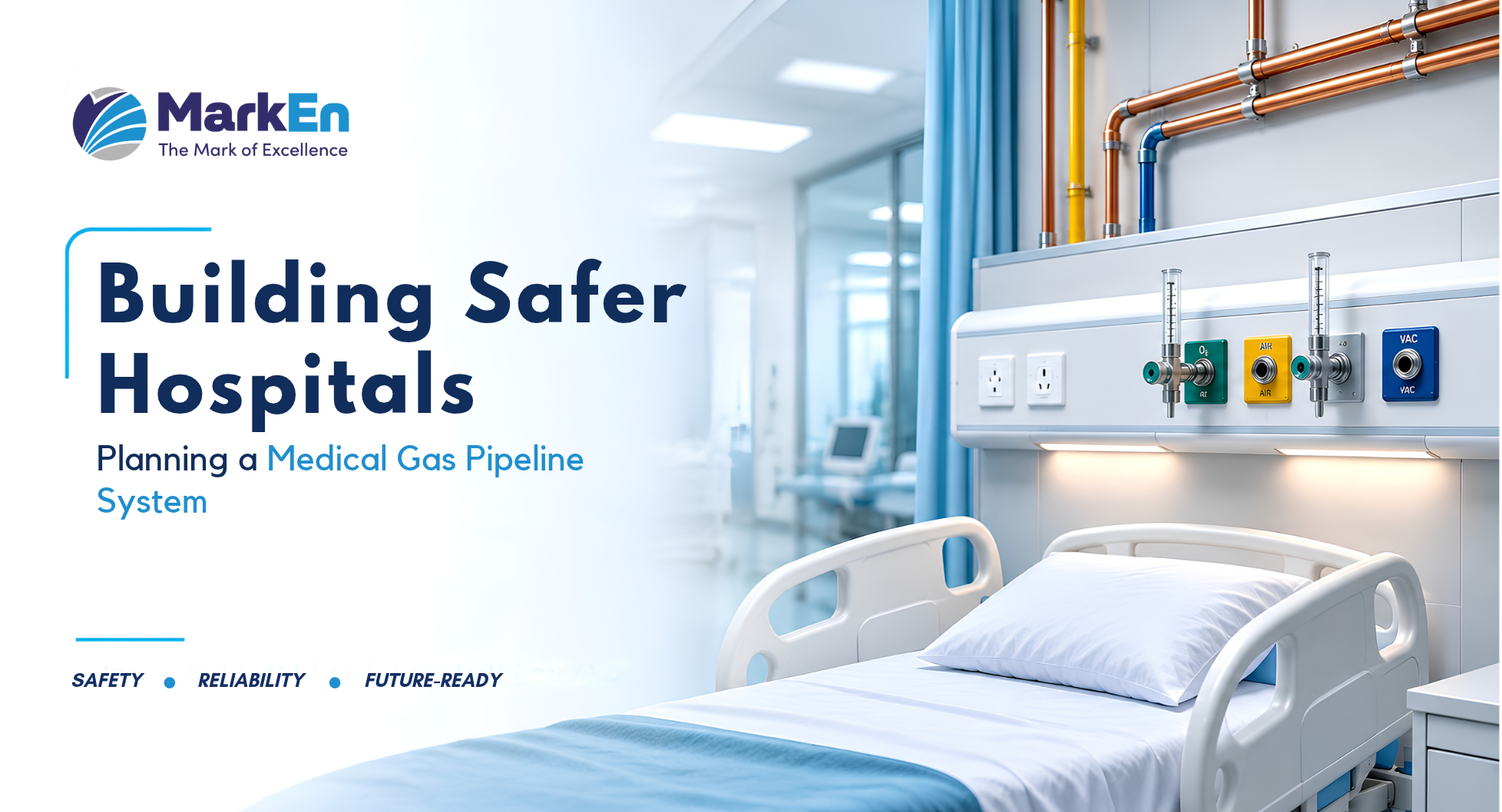
In a hospital setting, the availability of medical gases is vital for sustaining the normal functioning of the facility. In all units, such as intensive care units, operating rooms, as well as the emergency room, among others, medical practitioners need a steady supply of oxygen and other gases in order to offer healthcare services. With a good design of a Medical Gas Pipeline System (MGPS), it would be possible to make sure that gases reach their destination without fail. Nonetheless, planning for MGPS entails more than laying down pipelines and connecting the outlets. This includes taking into consideration certain other issues. The following are some issues that should be considered when designing a medical gas pipeline system in a hospital.
1. Understand the Hospital's Medical Gas Requirements
All health care facilities have unique needs based on their size and the number of different departments, as well as the patients that can be served. An ICU will need several gas outlets because of ventilators and other life-supporting apparatus, while surgery theatres have their unique needs regarding anesthesia and surgery. The hospital has to consider the following before designing the system:
1. The number of beds and patient load.
2. Medical gas requirements in various departments.
3. Number of terminal outlets and their locations.
4. Future expansion plans.
2. Choose the Right Equipment and Components
Components of a Medical Gas Pipeline System: A medical gas pipeline system has various components that are interconnected to keep a continuous flow of the gas supply. Some of them include: Medical gas manifolds: Assist in controlling the gas supply from cylinder banks.
● Medical air compressors: Provide compressed air.
● Vacuum pumps: Meet the suction requirements in clinical settings.
● Bed head panels: Provide easy access to the medical gas outlets, among others.
● Gas flowmeters: Assist in monitoring the flow of gas.
● Alarm systems: Notify hospital staff about any abnormalities in the operation.
Choosing appropriate medical gas equipment is critical in ensuring the reliability of the system.
3. Prioritise Safety During System Design
The safety of the patients should always be taken into account while planning for gas pipelines at the hospital. Some of the problems associated with the process include incorrect gas connections, pressure problems, leaks, and lack of monitoring. The hospitals should always make sure that there are safety measures put in place in the gas pipeline process. These measures will include marking of the gas outlets, isolation valves, and pressure monitors and alarms. The processes of designing, installing, and testing should be in line with the required standards. International standards for the process include ISO 7396-1, HTM 02-01, and NFPA 99.
4. Plan for Installation and Future Expansion
The design of the medical gas pipeline system must be able to accommodate not only the existing requirements but also those that might arise in the future. Inadequately thought-out pathways can cause problems in maintenance and can cause trouble when renovations take place. Hospital planners need to think about the location of the pipelines, accessibility of the isolation valves, the compatibility of electrical and HVAC systems, and possibilities of future addition of departments. Collaboration with experts in medical gas systems will aid in resolving possible issues.
5. Don't Overlook Maintenance and Monitoring
Anyhow, the installation of the medical gas pipework system is just the start. It is equally necessary to carry out regular inspections and preventative maintenance. It is necessary for hospitals to have maintenance protocols that will cover all aspects of pipeline integrity, pressure levels, alarm operation, backup supplies, and equipment functioning. Along with that, individuals who are supposed to operate and maintain the medical gas pipework systems should be trained properly.
Building Reliable Healthcare Infrastructure with the Right Planning
The reliable design of a medical gas pipeline system is critical in current hospitals' infrastructure. Proper functioning requires careful planning, adequate equipment, proper installation, and regular maintenance. Hospitals should treat MGPS planning as an infrastructural investment instead of a one-time installation process. They will be able to provide a safer environment for patients and medical staff by focusing on safety, functional needs, and preparedness. The team at MarkEn HealthTech knows how important a reliable health care infrastructure is. Our range of MGPS products includes such equipment as ICU bed head panels, BPC flowmeters, air-cooled pumps and vacuum pumps. Learn about the solutions in MGPS provided by MarkEn HealthTech.
Frequently Asked Questions
Recent blog
View All- Sustainability Without the Risk: A Practical Guide to Greener Cold Chain Shipping
- The Hidden Cost of Downtime: Why Reliable Cold Storage Is a Strategic Investment for Healthcare Facilities
- What Happens Between Manufacturing and Patient? The Journey of Temperature-Sensitive Medicines Through the Cold Chain
- How Alarm Systems Improve Cold Chain Reliability
- Blood Donor Couch: The Complete Guide for Blood Banks, Hospitals and Donation Centres
- Plasma Thawing Bath: The Complete Guide for Blood Banks, Hospitals and Laboratories
- Sterile Connecting Device: The Complete Guide for Blood Banks & Healthcare Facilities
- Contact Shock Freezer: The Complete Guide for Blood Banks, Hospitals & Plasma Processing Facilities
- Cytocentrifuge: Uses, Principle, Parts & Preparation
- Solar Direct Drive Systems: The Future of Battery-Free Vaccine Refrigeration