Blood Bank Refrigerator: Temperature, Standards, Price & Buying Guide (2026)
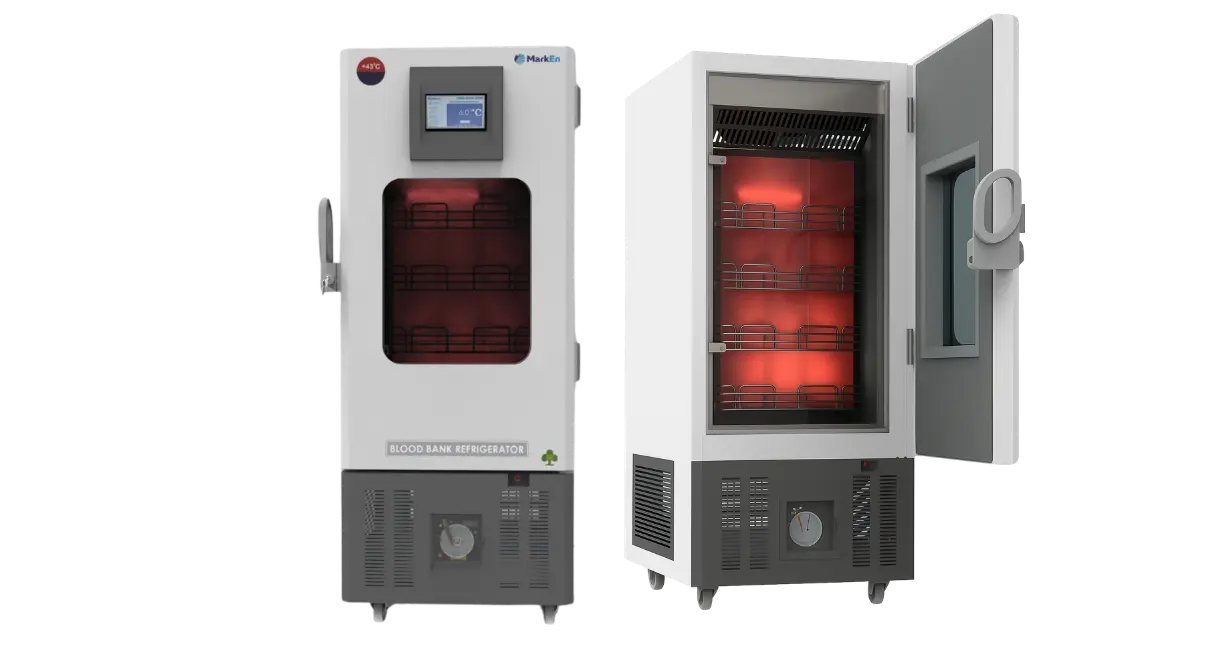
A blood bank refrigerator is a specialized medical refrigeration unit designed for safe storage of whole blood, red blood cells, plasma, and blood components under strictly controlled temperatures. Unlike domestic refrigerators, these systems are built to comply with blood fridge standards, ensuring precise temperature control, alarm monitoring, and uniform cooling distribution.
With growing demand across hospitals, diagnostic labs, and transfusion centers, the blood bank refrigerators marketis expanding rapidly across India, Bangladesh, and Pakistan.
Storage of Blood in Blood Bank
Proper storage of blood in blood bank facilities is critical to prevent hemolysis, bacterial growth, or loss of viability.
Blood Bank Refrigerator Temperature Range
Whole Blood & RBCs: +2°C to +6°C
Plasma (Freezer): -30°C to -40°C
Platelets: +20°C to +24°C (with agitation)
Maintaining this strict blood bank freezer temperature range ensures compliance with transfusion safety guidelines.
Blood Bank Refrigerator Function
The primary blood bank refrigerator function includes:
Maintaining uniform +2°C to +6°C temperature
Continuous digital monitoring
Audio-visual alarms
Forced air cooling for uniform distribution
Data logging for audits
These units are engineered to protect blood components from accidental freezing or overheating.
Blood Bank Refrigerator Temperature Monitoring
Advanced blood bank refrigerator temperature monitoring systems include:
Digital temperature display
Data logger with blood bank refrigerator graph output
Remote alarm system
SMS/IoT alerts
Power failure alert
Daily logging using a blood bank refrigerator temperature chart is mandatory in most accredited facilities.
Blood Bank Refrigerator Parts
Important blood bank refrigerator parts include:
Temperature sensor probe
Controller panel
Door gasket
Shelving system
Alarm buzzer
Backup battery
Cooling fan
Regular maintenance of these components ensures uninterrupted performance.
Blood Bank Refrigerator Size & Capacity
Common blood bank refrigerator size options available:
| Capacity | Suitable For |
|---|---|
| 200L | Small blood storage centers |
| 300L | Medium hospital blood banks |
| 400–500L | Large hospitals |
| 800L+ | Regional blood centers |
For example, blood bank refrigerator 200L units are widely used in district hospitals, while blood bank refrigerator 300 ltr price models are common in high-volume centers.
Blood Bank Refrigerator Price in India
The blood bank refrigerator price in India varies based on capacity, brand, and monitoring features.
Approximate range (2026):
200L: ₹1.8 – ₹3.5 lakh
300L: ₹3 – ₹5 lakh
500L+: ₹5 – ₹9 lakh
Prices vary by features such as data logging, IoT integration, and glass door design.
Solar Blood Bank Refrigerator
A solar blood bank refrigerator is ideal for rural healthcare centers with unreliable electricity.
Features include:
Solar panel integration
Battery backup
Energy-efficient compressor
Reliable temperature control
These systems improve cold chain sustainability in remote areas.
Blood Bank Refrigerated Centrifuge
Apart from refrigerators, blood banks also use a blood bank refrigerated centrifuge for component separation.
It allows:
Plasma separation
Platelet preparation
Controlled temperature during centrifugation
The blood bank refrigerated centrifuge price in India ranges between ₹4–15 lakh depending on rotor capacity and speed.
Blood Bank Deep Freezer & Freezer Temperature
A blood bank deep freezer stores plasma at lower temperatures.
Blood Bank Freezer Temperature
-30°C to -40°C for plasma storage
A blood bank freezer drawing shows reinforced insulation, cascade refrigeration system, and microprocessor control.
Blood Bank Refrigerator Standards & Compliance
All blood storage units must follow:
+2°C to +6°C strict range
Alarm system compliance
Temperature logging requirements
Biomedical storage regulations
Facilities often maintain a blood bank refrigerator PDF manual for audit reference.
For international trade, classification codes include:
Blood bank refrigerator HS code / HSN code: Typically under medical refrigeration equipment categories (check updated customs schedule for accuracy).
Blood Bank Refrigerator Alarm Check
Routine blood bank refrigerator alarm check ensures:
High temperature alert
Low temperature alert
Door open alarm
Power failure alert
Daily monitoring reduces risk of blood wastage.
Best Blood Bank Refrigerator: How to Choose
When selecting the best blood bank refrigerator, consider:
Capacity requirements
Temperature uniformity
Brand reliability
After-sales service
Data logging capability
Power consumption
Choosing certified systems ensures patient safety and regulatory compliance.
Frequently Asked Questions
Recent blog
View All- The Hidden Cost of Downtime: Why Reliable Cold Storage Is a Strategic Investment for Healthcare Facilities
- What Happens Between Manufacturing and Patient? The Journey of Temperature-Sensitive Medicines Through the Cold Chain
- How Alarm Systems Improve Cold Chain Reliability
- Blood Donor Couch: The Complete Guide for Blood Banks, Hospitals and Donation Centres
- Plasma Thawing Bath: The Complete Guide for Blood Banks, Hospitals and Laboratories
- Sterile Connecting Device: The Complete Guide for Blood Banks & Healthcare Facilities
- Contact Shock Freezer: The Complete Guide for Blood Banks, Hospitals & Plasma Processing Facilities
- Cytocentrifuge: Uses, Principle, Parts & Preparation
- Solar Direct Drive Systems: The Future of Battery-Free Vaccine Refrigeration
- Insulated Vaccine Van: Complete Guide to Vaccine Transportation and Cold Chain Logistics