Blood Collection Monitor: Uses, Working Principle & Medical Applications
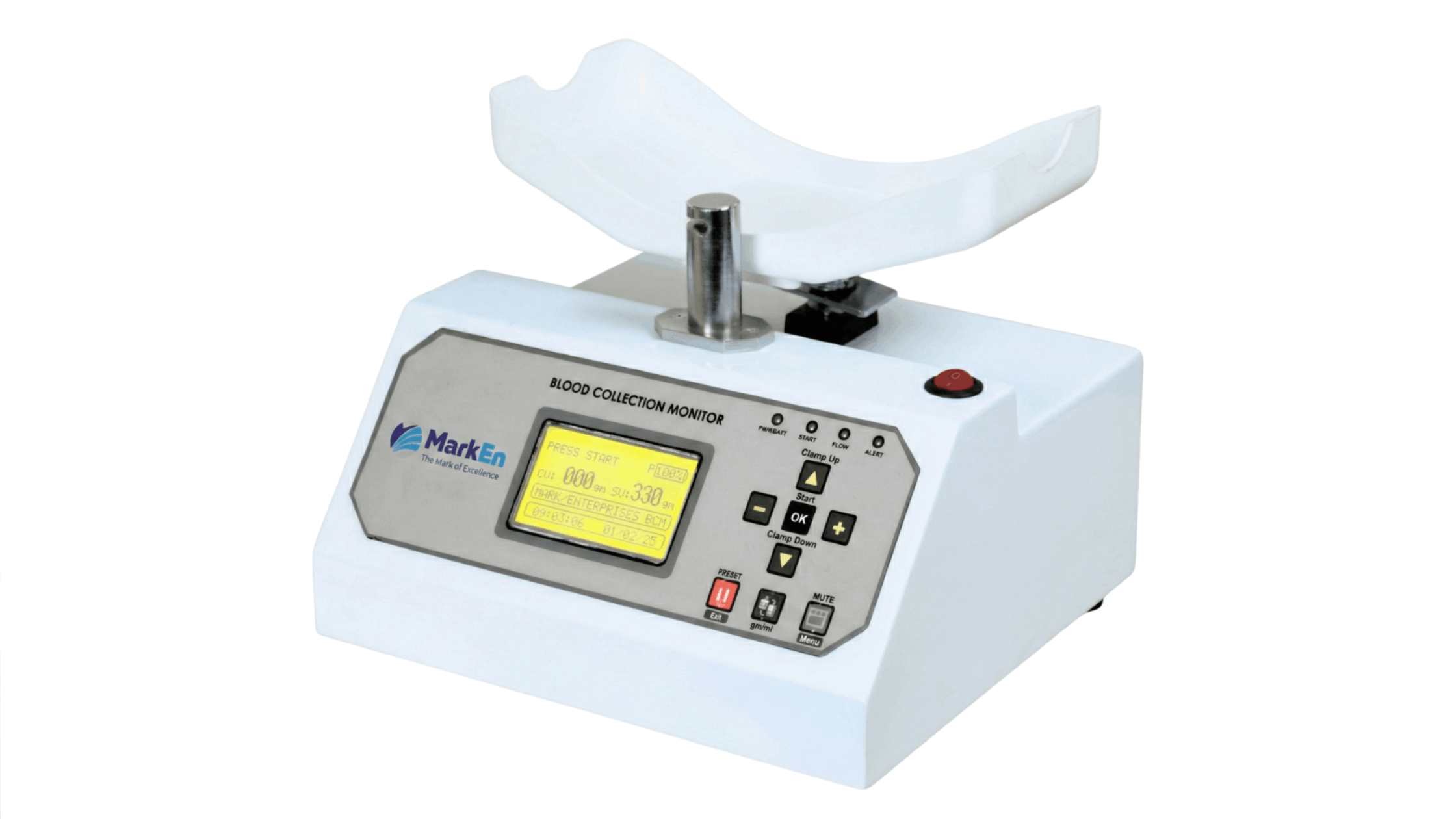
A blood collection monitor is an essential medical device used in blood banks, hospitals, and diagnostic laboratories to ensure safe and accurate blood collection during donation procedures. It automatically measures collected blood volume while continuously mixing anticoagulant solution to prevent clot formation.
Modern systems improve donor safety, collection accuracy, and blood component quality, making them critical equipment in transfusion medicine.
What is a Blood Collection Monitor?
A blood collection monitor (BCM) is designed to:
Measure blood weight/volume during donation
Maintain uniform mixing of blood with anticoagulant
Automatically clamp tubing once target volume is reached
Prevent over-collection or under-collection
These devices are widely used in blood banks and pathology labs where standardized blood collection is required.
Popular systems such as the Bioline blood collection monitor and blood collection monitor BCM 4 models are commonly deployed across healthcare facilities.
Bioline Blood Collection Monitor & BCM 4 Models
Healthcare institutions often use advanced equipment like:
Bioline blood collection monitor
Blood collection monitor BCM 4
These models typically offer:
Microprocessor-based control
High accuracy weighing sensors
Automatic flow control
Audio-visual alarms
Battery backup operation
Such systems improve operational efficiency in high-volume blood banks.
Blood Test Monitor for Diabetes
A blood test monitor for diabetes refers to glucometers used to monitor blood glucose levels regularly.
These devices help in:
Tracking fasting and post-meal glucose levels
Managing insulin dosage
Preventing hyperglycemia or hypoglycemia
Long-term diabetes control
Regular monitoring is essential for patients with Type 1 and Type 2 diabetes.
What Blood Test Monitors Your Liver Function?
Liver health is evaluated using Liver Function Tests (LFTs).
Key blood parameters monitored include:
ALT (Alanine Aminotransferase)
AST (Aspartate Aminotransferase)
Bilirubin levels
Alkaline phosphatase
Albumin
These tests help detect liver inflammation, infection, fatty liver disease, or medication-related toxicity.
Blood Test Monitoring Sulfasalazine
Patients taking Sulfasalazine, commonly prescribed for rheumatoid arthritis and inflammatory bowel disease, require routine blood monitoring.
Blood tests monitor:
Liver enzyme levels
White blood cell count
Platelet levels
Regular monitoring helps detect early side effects such as liver toxicity or bone marrow suppression.
Blood Test Monitoring Apixaban
Apixaban, an anticoagulant medication used to prevent blood clots, typically does not require frequent INR monitoring like warfarin. However, periodic blood testing is still recommended to evaluate:
Kidney function
Liver function
Hemoglobin levels
Bleeding risk indicators
Healthcare providers may adjust treatment based on laboratory findings.
Blood Test Monitoring for Carbamazepine
Patients on Carbamazepine, an anti-epileptic drug, require therapeutic drug monitoring.
Blood tests help assess:
Drug concentration levels
Liver enzyme function
Sodium levels
Complete blood count (CBC)
Monitoring ensures effective seizure control while avoiding toxicity.
Importance of Blood Monitoring in Modern Healthcare
Blood monitoring devices and laboratory testing systems support:
Disease diagnosis
Treatment monitoring
Drug safety evaluation
Chronic disease management
Preventive healthcare programs
From blood collection monitors used in blood banks to blood test monitors for diabetes, these technologies play a vital role in clinical decision-making.
Applications of Blood Collection Monitor in Healthcare Facilities
Blood collection monitors are widely used in:
Blood banks
Hospitals
Diagnostic laboratories
Transfusion centers
Research institutions
They ensure standardized blood collection practices aligned with global transfusion guidelines.
Frequently Asked Questions
Recent blog
View All- The Hidden Cost of Downtime: Why Reliable Cold Storage Is a Strategic Investment for Healthcare Facilities
- What Happens Between Manufacturing and Patient? The Journey of Temperature-Sensitive Medicines Through the Cold Chain
- How Alarm Systems Improve Cold Chain Reliability
- Blood Donor Couch: The Complete Guide for Blood Banks, Hospitals and Donation Centres
- Plasma Thawing Bath: The Complete Guide for Blood Banks, Hospitals and Laboratories
- Sterile Connecting Device: The Complete Guide for Blood Banks & Healthcare Facilities
- Contact Shock Freezer: The Complete Guide for Blood Banks, Hospitals & Plasma Processing Facilities
- Cytocentrifuge: Uses, Principle, Parts & Preparation
- Solar Direct Drive Systems: The Future of Battery-Free Vaccine Refrigeration
- Insulated Vaccine Van: Complete Guide to Vaccine Transportation and Cold Chain Logistics